
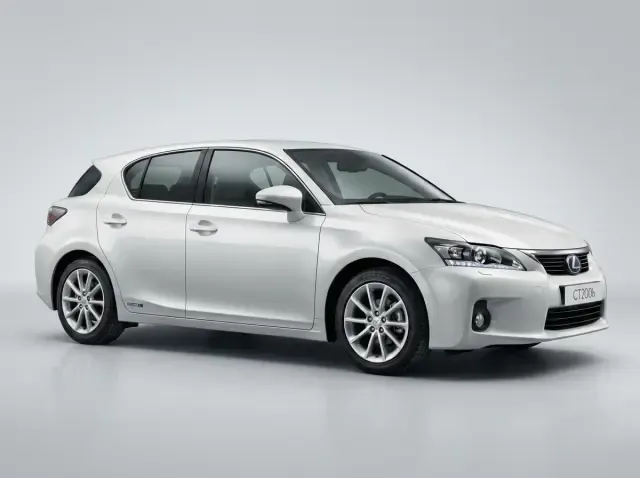

2011 — 2013
1.8L 2ZR-FXE I4 Hybrid (100kW) - FWD
Petrol Hybrid
Cold start 'rattle' and idle vibration test | Note: Crucial: Start the car when the engine is stone-cold. If you hear a loud, metallic knocking for 2-5 seconds, the EGR (Exhaust Gas Recirculation) system is likely choked with carbon. This is the #1 killer of the 2ZR engine in NZ, leading to blown head gaskets if ignored.
Monitor Energy Flow and Battery SOC fluctuation | Note: Watch the center screen's battery bars. If the level drops from 6 bars to 2 bars within a few minutes of EV driving, or if the petrol engine kicks in aggressively to charge at every stop, the hybrid battery cells are likely out of balance or near the end of their life.
Check spare tire well and C-pillar interior trim for dampness | Note: Common issue with aging CT200hs: the roof weld seams or hatch seals perish under NZ's harsh UV. Look for water pooling in the boot floor; moisture here can short-circuit the 12V battery and critical hybrid ECU modules located in the rear.
Listen for brake actuator 'barking' or constant cycling | Note: With the car in 'Ready' mode, stand outside and listen. A buzz every few seconds indicates an internal leak in the ABS/Brake Actuator. This is a notorious and expensive Lexus failure—the pump should only run occasionally to prime the system.
The 'Safe Zone' service: Mandatory EGR valve and cooler cleaning, plus intake manifold decarbonization. This prevents the dreaded head gasket failure common in early 2ZR engines.
Traction battery 'Golden Window': Most original NiMH batteries begin showing significant degradation at this age/mileage. A professional battery health check with module-level data is highly recommended.
Full hybrid cooling refresh: Replace the electric water pump (which can fail silently) and perform a deep-clean of the battery cooling fan to prevent heat-related cell damage.
Confirm the use of high-quality 0W-20 synthetic oil; using thicker oil (like 10W-40) can lead to piston ring gumming and oil consumption.
Verify the hybrid battery air intake filter (under the rear seat) is free of dust and pet hair; a blocked filter is the leading cause of premature battery failure.
Check the condition of the 12V auxiliary battery in the boot; if it's over 4 years old, replace it to avoid 'ghost' errors and starting issues.
Inspect the front lower control arm bushings; the CT200h is a heavy car for its size and NZ's chip-seal roads tend to tear these bushes by 120k km.
Flush the eCVT transmission fluid; despite Lexus NZ's 'lifetime' claim, a fresh drain-and-fill every 80k km significantly extends the planetary gear life.
Estimated repair costs if issues arise
The single largest risk. A new OEM pack provides 10+ years of life, whereas individual cell replacement (re-conditioning) is a cheaper but temporary fix.
A major failure item for high-mileage Lexus hybrids. Parts alone are expensive, and calibration requires specialized Lexus/Toyota diagnostic tools.
If the 'cold start rattle' is ignored, the head gasket will eventually fail. A proactive clean of the EGR system is essential insurance for any pre-2014 CT200h.
The electric pump that keeps the hybrid 'brain' cool. If it fails, the car will enter 'limp mode' or shut down entirely on the motorway.
Noticed something inaccurate or missing?Suggest an edit→
Disclaimer: This report is generated with the assistance of AI analysis based on verified automotive data. While we strive for 100% accuracy, enthusiasts should always conduct physical inspections and consult service records. View Full Disclaimer